Practical mindfulness: A step-by-step guide to reduce stress
- Mindfulness effectively reduces stress and improves emotional regulation with brief daily practices.
- Starting with simple, adaptable exercises and consistent timing encourages sustainable habits.
- Mindfulness is a supportive tool that works best alongside therapy, lifestyle changes, and social support.
Mindfulness has strong scientific backing as a tool for reducing stress, calming anxiety, and supporting emotional recovery after grief. Yet many people struggle to begin because they assume it demands long retreats, expensive apps, or an empty mind. It doesn't. Even brief daily practice interrupts the cycle of rumination, lowers stress hormones, and improves emotional regulation in ways comparable to established therapies like CBT. This guide cuts through the confusion and gives you a clear, practical path from your very first session to a sustainable, meaningful routine that genuinely fits your life.
Table of Contents
- Essential tools and the science of mindfulness
- Step-by-step: Core mindfulness mechanics
- Troubleshooting: Common challenges and adaptations
- Verifying impact: What to expect, how to sustain progress
- A fresh perspective: Mindfulness as a practical adjunct, not a cure-all
- Take the next step: Mindfulness support and resources
- Frequently asked questions
Key Takeaways
Evidence-based stress relief mindfulness is proven to significantly reduce stress in studies and clinical settings. Simple, adaptable methods You can practise mindfulness in daily life even if you are busy or struggling emotionally. Troubleshooting guidance common challenges like wandering minds and discomfort have practical solutions outlined here. Long-term impact regular mindfulness delivers sustained benefits for mental health over months. Support complements progress professional coaching and hypnotherapy can reinforce the positive effects of mindfulness.
Essential tools and the science of mindfulness
Mindfulness is, at its core, the practice of paying deliberate, non-judgmental attention to the present moment. That sounds deceptively simple, but it represents a fundamental shift in how most of us habitually process our thoughts and feelings. Before jumping into technique, it helps to understand what you actually need and why the science supports making the effort.
What you need to get started
The good news is that the barrier to entry is very low. You do not need specialist equipment, a dedicated studio, or a great deal of spare time. What you do need is:
- A reasonably quiet space where you will not be interrupted for at least five to ten minutes
- A comfortable posture, whether seated on a chair, cushion, or the floor, with your spine upright but not rigid
- A consistent time of day so the habit can take root naturally
- An open, curious attitude rather than a goal-oriented mindset
That last point matters more than most guides acknowledge. People who approach mindfulness as something they must "get right" frequently give up early because they judge themselves harshly for having a busy mind. A wellness checklist for meditation can be a helpful starting reference to make sure your environment and expectations are well-prepared before your first session.
The science behind the practice
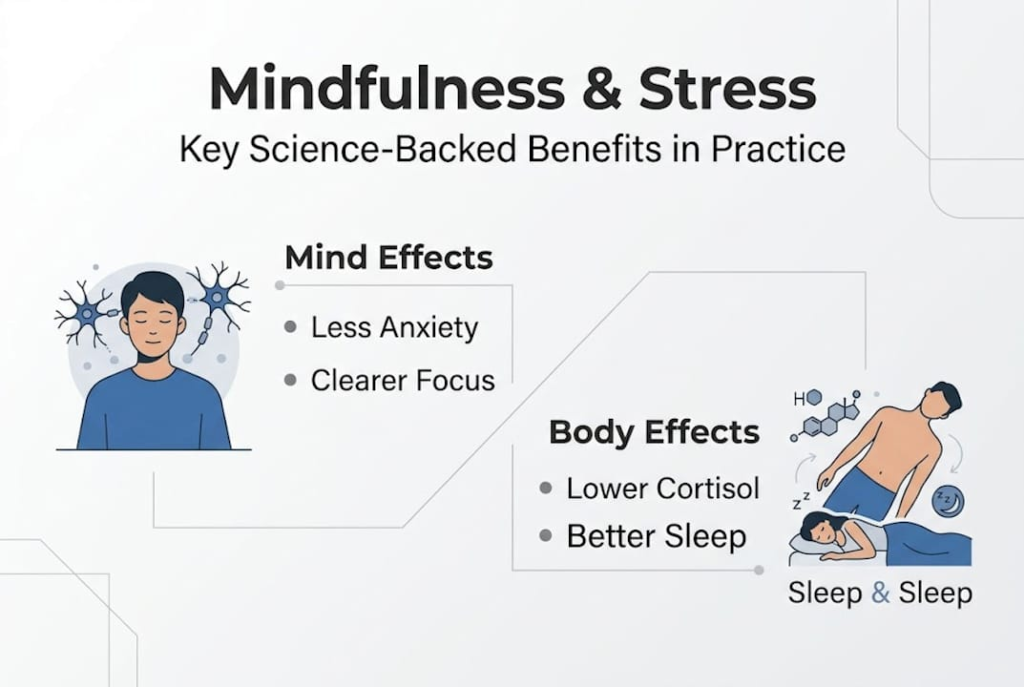
Research into mindfulness has grown considerably over the past two decades. A large meta-analysis found a standardised mean difference of -0.53 in perceived stress among adults who completed structured mindfulness programmes compared to control groups. In plain terms, that is a meaningful, statistically significant reduction in how stressed people report feeling. It is not a minor blip; it represents a genuine shift in daily experience.
For context on mindfulness and mental health more broadly, the mechanisms include reduced cortisol output, improved prefrontal cortical activity associated with emotional regulation, and a measurable dampening of the amygdala's threat-response. In short, regular practice literally changes how your brain responds to pressure.
Formal vs informal mindfulness: a quick comparison Type what it looks like Time required Best for Formal practice Seated meditation, body scan, yoga10 to 45 minutes daily Building a structured habit Informal practice Mindful eating, walking, washing up Any moment, any duration Reinforcing awareness throughout the day guided practice App, class, or therapist-led session Varies Beginners or those needing extra structure
Both formal and informal approaches carry real benefits. The core mechanics of mindfulness involve sitting comfortably with an upright posture, focusing on the breath without trying to alter it, noting thoughts non-judgmentally and returning gently to the breath, performing a body scan for tension, and incorporating mindful movement such as walking or gentle yoga. You can weave these mechanics into formal sessions or apply them informally during everyday activities.
Step-by-step: Core mindfulness mechanics
Once you recognise the value and tools, it is time for actionable steps you can follow with clarity. The process below is designed for complete beginners but remains useful even if you have dabbled in mindfulness before and lost momentum.
The core sequence, step by step
- Choose your time and space. Pick a consistent slot, perhaps first thing in the morning or just before bed, and a spot where distractions are minimal. Consistency trains your nervous system to settle more readily.
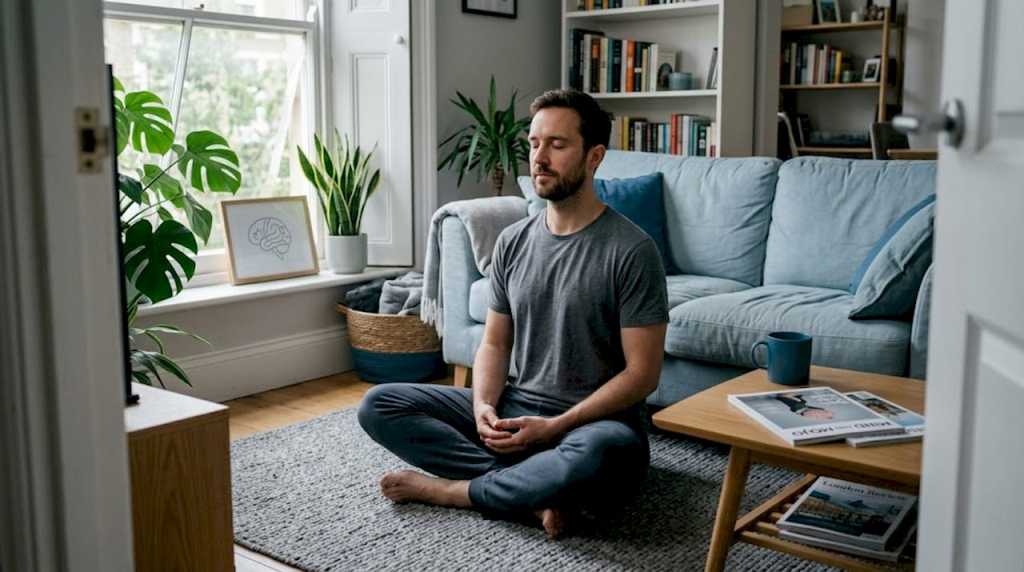
- Adopt a comfortable, upright posture. Sit in a chair with your feet flat on the floor, or cross-legged on a cushion. Rest your hands on your thighs. Keep your back supported but not slumped. Closing your eyes is optional; a soft downward gaze works just as well.
- Anchor to the breath. Bring your attention to the physical sensation of breathing. Notice the slight coolness of air entering your nostrils, the gentle rise of your chest or abdomen, and the slow release on the exhale. You are not trying to change your breathing; you are simply observing it.
- Notice when your mind wanders, then return. Your mind will drift. It is not a failure; it is the practice. Each time you notice a thought, a feeling, or a sound pulling your attention away, gently acknowledge it ("thinking") and return your focus to the breath. This act of returning is the actual skill you are developing.
- Perform a body scan. After several minutes of breath focus, shift your attention slowly through your body from the top of your head to the soles of your feet. Wherever you notice tightness, breathe into that area and consciously release the tension on the exhale.
- Incorporate mindful movement if stillness is difficult. Concentration vs mindfulness approaches differ in that mindfulness can be applied during movement. A slow, deliberate walk, paying close attention to each foot contacting the ground, is a fully valid mindfulness practice. So is gentle yoga performed with awareness rather than ambition.
The full practice mechanics outlined above also recommend the "raisin exercise" as an accessible entry point: spend two to three minutes examining a single raisin using all five senses before eating it. It sounds almost comedic, but it rapidly trains the mind to sustain present-moment attention.
Pro Tip: If you find sitting still genuinely distressing at first, start with just two minutes of breath focus followed by a five-minute mindful walk. Build duration slowly rather than forcing yourself into longer sessions prematurely.
Quick reference summaryStep Action Duration Settle Choose posture, close eyes1 minute Breathe Focus on breath sensation5 to 10 minutes Return Notice wandering, refocus Ongoing Scan Move attention through body5 minutes Move Mindful walk or gentle yoga 5 to 10 minutes
Pairing this sequence with mindfulness and hypnotherapy techniques can deepen the effect considerably, particularly for people whose anxiety makes it difficult to settle into stillness independently.
Troubleshooting: Common challenges and adaptations
With the basic mechanics underway, it is vital to know what to do when challenges arise so you can keep the benefits sustainable. Almost everyone encounters obstacles; the difference between those who maintain a practice and those who abandon it usually comes down to knowing how to adapt rather than quit.
The most common challenges, and how to handle them
- Wandering mind: This is universal. Rather than viewing it as a failure, recognise that noticing the wander is the practice itself. The moment of noticing is a moment of mindfulness.
- Physical discomfort: If sitting on the floor causes pain, use a chair. If any posture causes distress, adapt it. Mindfulness is not an endurance exercise.
- Restlessness or boredom: These are often signs that your nervous system is unused to stillness. Start with shorter sessions, two to five minutes, and increase gradually.
- Feeling more emotional, not less: This is more common than most guides admit, particularly among people dealing with grief or unresolved stress. When distress increases during practice, the recommended approach is to pause, ground yourself by pressing your feet firmly into the floor, focus on five things you can see in the room, and consider shortening your sessions significantly.
- Loss of motivation over time: Long-term adherence is genuinely hard. Short bursts, two minutes at a desk or three mindful breaths before a meeting, are far more sustainable than ambitious daily targets that collapse under real-life pressure.
Adapting for grief and emotional distress
Grief deserves special attention. Mindfulness is increasingly used as a support tool during bereavement, but it requires careful handling. Sitting quietly with an undistracted mind can bring suppressed emotions to the surface suddenly and with intensity. This is not dangerous, but it can feel overwhelming.
"If you are using mindfulness during grief and you notice distress escalating rather than easing, please pause the session, ground yourself, and speak with a qualified therapist before continuing. Mindfulness is a support, not a substitute for grief recovery work."
Research confirms moderate effect sizes for mindfulness across mental health conditions, ranging from 0.22 to 0.63 depending on the outcome and comparison group. These are genuine but not dramatic effects, which is important to understand. Mindfulness complements therapeutic support; it rarely replaces it entirely.
Pro Tip: If you find mindfulness for anxiety or grief consistently increases your distress rather than reducing it, do not push through alone. This is a signal that additional support would help you get far more from the practice.
Physical limitations and alternative formats
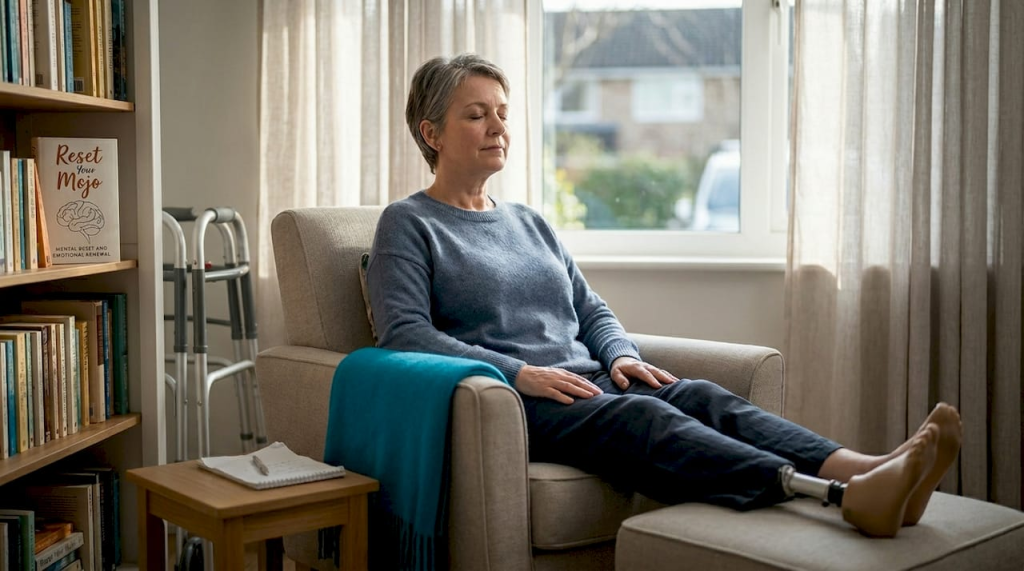
For those with chronic pain, mobility issues, or sensory processing differences, standard seated meditation may need modification. Lying down with awareness (provided you stay awake), chair-based yoga, and even mindful listening to music are all legitimate adaptations. The mindfulness tips that work for one person may not suit another, and adapting intelligently is a sign of self-awareness, not weakness.
Verifying impact: What to expect, how to sustain progress
Once you have adapted to your own needs, measure your progress using validated benchmarks. Many people abandon mindfulness prematurely because they expect dramatic change within days. Understanding the realistic timeline helps you stay committed through the early weeks when change is subtle.
What the research tells us about timelines
- Weeks 1 to 2: Most people notice small but real improvements in how quickly they can calm down after a stressful event. Sleep quality often improves before mood does. Do not expect dramatic stress reduction yet; your nervous system is just beginning to learn a new pattern.
- Weeks 3 to 4: A sense of slightly more mental space during difficult moments typically emerges. Rumination, the repetitive loop of anxious or sad thinking, begins to feel less automatic.
- Week 8: Research based on the Mindfulness-Based Stress Reduction (MBSR) programme, which involves 30 to 45 minutes of daily formal practice, demonstrates the clearest evidence of significant stress reduction at this point. The meta-analysis effect size of SMD -0.53 is achieved around this marker.
- Months 3 and beyond: Crucially, effects persist three months after training ends, suggesting that the skills genuinely become internalised rather than dependent on continued intensive practice.
How to sustain your practice through setbacks
Setbacks are not signs that mindfulness has stopped working; they are normal features of any behavioural change. Here is a practical sustaining framework:
- Track your practice in a simple notebook. Note the date, duration, and one word describing how you felt afterwards. Patterns become visible over weeks.
- Lower the bar rather than abandoning the practice entirely during difficult periods. Three mindful breaths counts.
- Revisit your reasons for starting. Reconnecting with your original motivation, whether that is managing anxiety, processing grief, or sleeping better, can re-ignite commitment.
- Recognise when additional support is warranted. If stress levels are not responding after eight weeks, or if emotional distress is significant, exploring mindfulness benefits alongside structured therapeutic support is likely to produce better outcomes than mindfulness alone.
The evidence is clear that mindfulness works best when practised consistently over time rather than intensively for short bursts followed by nothing. Even ten minutes daily, sustained over eight weeks, produces measurable neurological and psychological change.
A fresh perspective: Mindfulness as a practical adjunct, not a cure-all
Spending time with the research, and with people who have genuinely used mindfulness to navigate stress, anxiety, and grief, leads to an honest conclusion that popular wellness culture tends to gloss over. Mindfulness is powerful, but it is not magic.
The evidence is strong for stress and anxiety outcomes, more mixed for depression, chronic pain, and complex trauma. Treating mindfulness as the only tool you need risks leaving people feeling like personal failures when it does not resolve everything. It works best as part of a broader approach that might include therapy, lifestyle changes, and social support.
There is also something worth saying about informal practice. Sitting cross-legged for forty-five minutes daily is not realistic for most people managing demanding lives. But bringing genuine, curious attention to a cup of tea, a walk to the car, or even a difficult conversation is mindfulness. These informal moments accumulate. They are not lesser versions of the real thing; the mindfulness editorial evidence genuinely supports them as equivalently valuable. If formal meditation feels inaccessible right now, start with informal practice and build from there without guilt.
Take the next step: Mindfulness support and resources
Mindfulness is a meaningful starting point, but for many people, sustainable wellbeing requires a little more structure and personalised guidance.
At Reset Your Mojo, mindfulness integrates naturally with hypnotherapy services to create deeper, longer-lasting change for anxiety, stress, grief, and more. For those looking to build resilience and purposeful habits alongside mindfulness, life coaching support offers a structured and compassionate framework. You can also browse real stories on our client feedback page to see how others have combined these approaches to meaningful effect. If you are ready to take the next step, we are here to support you.
Frequently asked questions
How quickly can mindfulness reduce stress?
Many people notice improvements within two to three weeks, though the strongest evidence shows significant stress reduction after a full eight weeks of regular practice.
Is it normal to find mindfulness difficult at first?
Yes, a wandering mind is entirely normal and expected. Starting with brief sessions of two to five minutes makes the practice far more approachable and the habit easier to sustain.
Can mindfulness help with grief and emotional pain?
Mindfulness can gently support people moving through grief, but if distress increases during practice rather than easing, it is advisable to pause and seek qualified therapeutic support.
Is informal mindfulness as beneficial as formal meditation?
Research indicates that informal mindfulness practices such as mindful walking or attentive eating are as valuable as formal seated meditation, making consistency far more achievable for most people.