
Why prioritise mental health: Your guide to better wellbeing
- Mental health challenges are widespread in the UK, affecting millions across all age groups and backgrounds.
- Prioritising support is essential at every severity level, not just during crises, to enable quicker recovery and well-being.
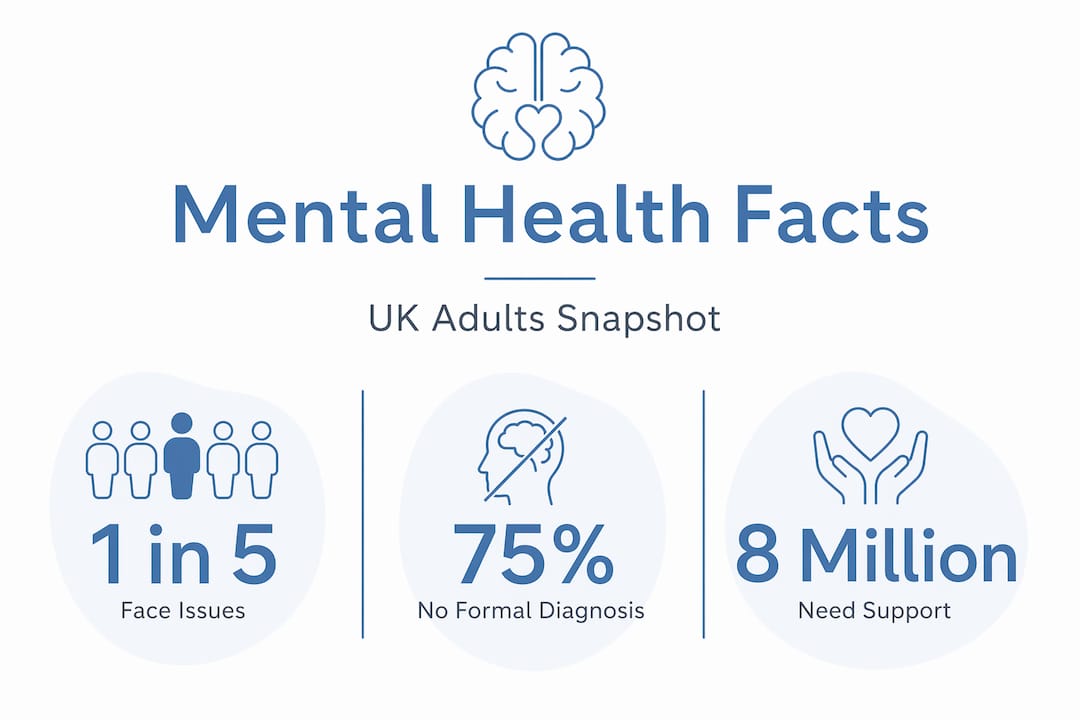
One in five UK adults experiences a mental health problem in any given week, yet most people wait years before seeking any form of support. Mental health problems are common and increasing, and the gap between experiencing distress and actually doing something about it remains stubbornly wide. This article is for anyone who suspects their stress, anxiety, grief, or fear is quietly running the show. You will understand why mental health deserves your active attention, how to identify the right level of support for your specific situation, and what practical steps you can take right now, before things reach breaking point.
Table of Contents
- Mental health in the UK: What the data really shows
- Prioritising isn't just about crisis: Matching support to your needs
- Core support options in the UK: Pathways and personalisation
- Tailored approaches for phobias, anxiety, and beyond
- The truth about prioritising mental health: What most advice misses
- How you can take the next step for your mental wellbeing
- Frequently asked questions
Key Takeaways
PointDetailsMental health is widespreadOver one in five UK adults experience a common mental health condition today.Personalised support mattersMatching your distress to the right type of help gets you more effective results.Crises aren’t the only triggerYou don’t need to wait for a crisis to start prioritising your mental health.Help is accessibleNHS talking therapies and practical support options are available for self-referral—even without a diagnosis.Tailored therapy worksStrategies like CBT and exposure therapy are highly effective especially for issues like phobias.
Mental health in the UK: What the data really shows
Let us start by understanding just how widespread mental health challenges are in the UK. The numbers are not just surprising; they actively challenge the assumption that struggling is unusual.
Mental health problems affect many adults across all age groups and backgrounds in England, and the trend is moving in the wrong direction. Rates of anxiety and depression have risen considerably over the past decade, accelerated by the cost of living crisis, social isolation, and post-pandemic pressures. Young people have been hit hardest. Women and individuals living in more deprived areas consistently report higher levels of psychological distress, which means mental health is also a social justice issue, not just a personal one.
GroupApproximate prevalence of common mental disorderAll adults (England)Around 1 in 5 per weekWomenHigher than average, particularly anxietyYoung people (16 to 24)Rising sharply over past decadePeople in deprived areasSignificantly above national averageOlder adults (65+)Often under-reported and under-diagnosed
What does this mean in practice? It means that in any average workplace, classroom, or family gathering, several people are managing something significant, quietly. Staying on top of the latest mental health trends helps us understand that these patterns are systemic, not personal failures.
Key facts worth holding onto:
- Anxiety and depression are the most commonly reported conditions in England.
- Mixed anxiety and depressive disorder is the single most prevalent clinical category in community surveys.
- Severe mental illness, including psychosis and bipolar disorder, affects a smaller but clinically significant portion of the population and carries its own serious consequences.
- Untreated mental health problems are associated with higher rates of physical illness, reduced work performance, relationship breakdown, and lower quality of life.
"Mental health problems are common and increasing. The Adult Psychiatric Morbidity Survey data continues to show rising rates across most age groups, with younger adults and women bearing a disproportionate share of the burden." — Mental Health Foundation APMS Briefing, June 2025
The data tells a clear story. Mental health challenges are not niche or rare. They are part of everyday life for millions of people across the UK, and that reality makes early, personalised support not just desirable but genuinely urgent.
Prioritising isn't just about crisis: Matching support to your needs
Now that we see how many people are affected, it is important to understand that prioritising your mental health does not only mean seeking crisis intervention. This is one of the most common misunderstandings, and it holds a lot of people back from taking action.

Many people tell themselves they are "not bad enough" to need help. They compare their experience to what they imagine serious mental illness looks like and conclude that their anxiety, sleep problems, low mood, or persistent worry does not qualify. This is both inaccurate and genuinely harmful.Prioritisation is not only about diagnose-and-treat. It is about matching the level and type of distress you are experiencing to appropriate support, which may include non-clinical options like structured self-help, coaching, or therapeutic techniques. On the other end of the spectrum, severe mental illness involves substantial and lasting impairment, which underlines the point that the field covers far more than "everyday stress."
Here is a practical way to think about the range of support options and when each tends to be most relevant:Level of distressTypical signsSuggested starting pointMild (subclinical)Occasional worry, low energy, disrupted sleepSelf-help, lifestyle changes, mindfulnessModeratePersistent anxiety, phobias, low mood affecting daily lifeTalking therapy, hypnotherapy, coachingSignificantAnxiety disorders, trauma responses, griefEvidence-based therapy (CBT, NLP, counselling)SeverePsychosis, severe depression, inability to functionClinical assessment, psychiatric support
Getting personalised support plans right is about being honest with yourself about where you sit on that spectrum, and then taking action that genuinely fits.
Pro Tip: If you find yourself dismissing your own distress because someone else "has it worse," that comparison is a barrier, not a reason to delay. Your experience is valid at every level, and earlier support nearly always leads to quicker recovery.
Here is a numbered approach to right-sizing your mental health support:
- Name what you are feeling. Be specific. "Stressed" is broad. "I panic when I think about presentations at work" is specific and actionable.
- Assess duration and impact. Has this been going on for weeks or months? Is it affecting your relationships, sleep, or work? Duration and functional impact help gauge severity.
- Research your options. From guided self-help to specialist therapy, understanding what exists prevents you from defaulting to whatever is most convenient.
- Start somewhere. Imperfect action beats perfect inaction. Many people delay while waiting for the "right" moment, which never comes.
- Review regularly. Support needs change. What helped six months ago may no longer be the best fit.
Looking into wellness strategies from a broader wellbeing perspective can also complement formal therapeutic work, particularly at the mild to moderate end of the spectrum.
Core support options in the UK: Pathways and personalisation
So, how do you actually align your needs to the right help available in the UK? The options are broader than most people realise, and understanding them removes a significant barrier to getting started.Talking therapies are a core, practical support method for stress, anxiety, depression, phobias, and grief-type distress in the UK. Crucially, you can access NHS talking therapies without a GP referral in most areas of England through the Improving Access to Psychological Therapies programme. This means you can self-refer today, without waiting for a formal diagnosis or a doctor's appointment.
Key support options available to most people in the UK:
- NHS talking therapies (IAPT): Self-referral available for anxiety, depression, OCD, PTSD, and phobias. Includes CBT, guided self-help, and counselling.
- Online therapy platforms: Growing provision of digital support, useful for those with limited mobility, busy schedules, or preference for remote access.
- Group therapy: Particularly effective for social anxiety and grief, as shared experience normalises distress and reduces isolation.
- Clinical hypnotherapy: Evidence-informed and highly personalised, well-suited to anxiety, phobias, sleep issues, and habit change. Available in-person or online through practices like Reset Your Mojo.
- NLP (Neuro-Linguistic Programming): Useful for reframing negative thought patterns, building resilience, and addressing performance anxiety.
- Person-centred counselling: Focuses on building self-awareness and emotional understanding without a prescriptive framework.
- Informal support: Peer support groups, community organisations, and structured self-help resources all have a legitimate and valuable role.
Exploring therapy insights before committing to a particular approach is time well spent. Understanding what different modalities involve means you are more likely to engage fully rather than dropping out because the format did not suit you.
Pro Tip: Research consistently shows that the therapeutic relationship matters as much as the specific method. Whichever therapy you choose, feeling safe and understood by your practitioner has a significant bearing on outcomes.
Exploring therapy comparisons can help you think through whether a structured clinical approach or a more coaching-based model is the right fit for your current circumstances.
Personalisation is not a luxury in mental health care. It is a necessity. Generic approaches applied without consideration of the individual often produce poor outcomes, which then reinforce the unhelpful belief that "therapy does not work for me." The right support, applied thoughtfully to your specific situation, is a different experience entirely.
Tailored approaches for phobias, anxiety, and beyond
Among the most common questions we hear: what actually works for phobias, anxiety, or long-standing fears that have shaped your life for years?CBT and gradual exposure are among the most effective treatments for phobias and are widely recommended within NHS guidance. Exposure therapy, sometimes called systematic desensitisation, works by gradually and safely introducing you to the object or situation you fear, starting at a very low level of exposure and building incrementally. Over time, your nervous system learns that the feared stimulus is not actually dangerous, and the anxiety response reduces.
What this looks like in practice:
- For a fear of flying: Starting with looking at images of aircraft, then watching videos, then visiting an airport, and eventually booking a short flight.
- For social anxiety: Beginning with one-to-one conversations in safe environments before progressing to small group settings.
- For specific phobias such as spiders or heights: Structured sessions that increase proximity or intensity of exposure in very manageable steps.
"CBT is very effective for treating phobias. A type of CBT known as exposure therapy involves gradual exposure to what you fear, in a controlled way." — NHS, Phobias treatment
It is worth noting an important caveat: computerised CBT is not recommended for adult-specific phobias within NHS guidelines. This matters because many people assume that an app-based or entirely self-directed digital approach will be as effective as working with a skilled practitioner. For phobias particularly, the presence of a trained professional who can monitor, pace, and adjust the exposure process significantly improves outcomes.
If you suspect a specific fear or phobia is limiting your life, these steps are a useful starting point:
- Acknowledge that your avoidance behaviour is maintaining the fear, not protecting you from it.
- Consider whether the fear has been present since childhood or developed after a specific event.
- Seek a practitioner experienced in exposure techniques or hypnotherapy, both of which can address the anxiety at a deeper level than self-help alone.
Exploring practical phobia tools can offer a useful entry point into understanding what facing fear constructively actually involves.
Hypnotherapy is particularly well suited to phobias and anxiety because it works at the level of the unconscious mind, where many fear responses are stored and triggered. Unlike purely cognitive approaches, which focus on changing conscious thought patterns, hypnotherapy can help shift the emotional memory that underpins the fear response itself. Combined with evidence-based techniques like CBT and NLP, it offers a genuinely tailored toolkit for people who have struggled to shift persistent anxiety through other means.
The truth about prioritising mental health: What most advice misses
Here is something we notice constantly in practice: most general mental health advice stops just short of being genuinely useful. It tells you to "talk to someone," "practise self-care," or "seek professional help if needed," and then leaves you to figure out the rest. That gap between the advice and the actual next step is where most people get stuck.
The biggest flaw in standard guidance is that it treats mental health as a binary. Either you are well, or you are in crisis. Either you need professional intervention, or you can manage with a bit of mindfulness. This framing excludes the vast middle ground where most people actually live, the place where anxiety is manageable on good days but corrosive over years, where grief does not stop your life entirely but dims it considerably, where fear of a situation keeps shrinking your world, slowly and quietly.
We also see a consistent pattern: people who wait until things become severe before seeking support have a significantly harder journey. Not because their difficulties are worse in kind, but because years of avoidance, self-criticism, and accumulated stress responses have layered on top of the original issue. Acting earlier, even imperfectly, consistently leads to quicker, more complete recovery.
The other thing most guides miss is the importance of reviewing and updating your support plan over time. Mental health is not a static condition. Your needs at 25 are different from your needs at 45. A life event like bereavement, redundancy, or a relationship breakdown can shift the landscape dramatically. Building a habit of regular reflection, not just reactive help-seeking in a crisis, is one of the most protective things you can do. Reading about support plan wisdom reinforces why ongoing review matters as much as the initial decision to seek help.
The honest truth is this: prioritising your mental health is an ongoing practice, not a single event. It requires the same consistency and attention you might give to physical health, and it pays off in the same compounding way.
How you can take the next step for your mental wellbeing
If you are ready to make mental health a genuine priority, personalised support makes all the difference between knowledge and actual change.

At Reset Your Mojo, we specialise in exactly the kind of tailored, compassionate approach this article has been describing. Whether you are dealing with anxiety that feels too familiar, a phobia that has quietly limited your choices, grief that has lingered longer than you expected, or simply a sense that you are not functioning at your best, our services are designed to meet you where you are. Our professional hypnotherapy services address a wide range of concerns using evidence-based techniques, including clinical hypnotherapy, CBT, and person-centred counselling. If you are interested in building resilience and reframing limiting beliefs, our life coaching and NLP programmes offer a structured and highly personalised pathway. We offer both in-person sessions in Grantham and online sessions nationwide. Visit Reset Your Mojo to explore your options and take that first step.
Frequently asked questions
What is the most common mental health issue in the UK?
Anxiety and depression are the most prevalent, affecting more than one in five UK adults in any given week, making them the leading mental health concerns across all age groups.
Can I get therapy on the NHS without a diagnosis?
Yes, you can self-refer to NHS talking therapies without speaking to a GP, making it accessible for anxiety and depression without requiring a formal diagnosis first.
What is exposure therapy and when is it used?
Exposure therapy is a gradual, controlled process used primarily for phobias and anxiety disorders, helping you face your fear incrementally until your threat response reduces naturally.
Is prioritising mental health only for people with a diagnosis?
No, prioritising mental health is important for everyone. Prioritisation is about matching distress to appropriate support, which applies whether or not you have ever received a formal clinical diagnosis.